AI Engineering
Chose PostgreSQL Over MySQL for My Side Projects
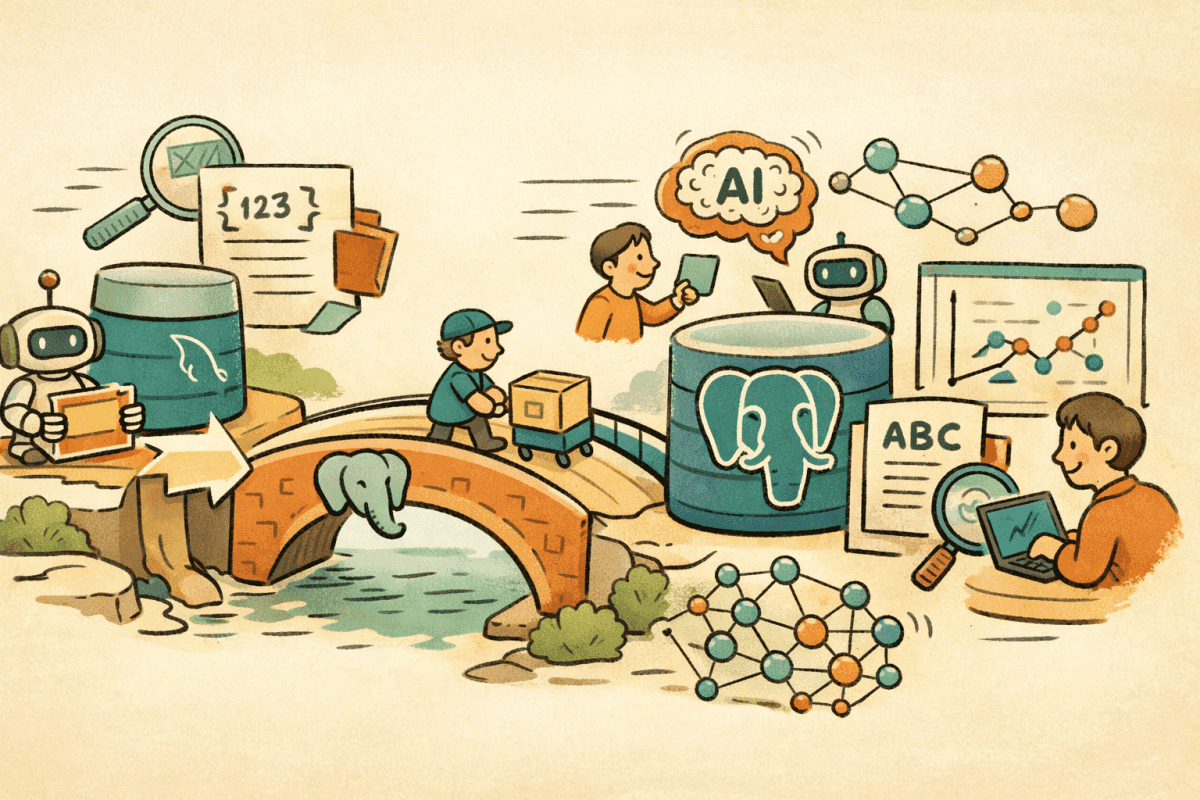
Switching from MySQL to PostgreSQL unlocked powerful features for a recent project, including robust JSON support with `jsonb` for indexing and querying, and built-in full-text search using `tsvector` and `tsquery`. Additionally, PostgreSQL’s pgvector enables seamless storage and similarity searches for AI embeddings, streamlining workflows without the need for extra infrastructure. For complex data applications, PostgreSQL emerges as the superior choice.
Feb 21, 2026
2 min read

AI Engineering
How I Built a RAG Chatbot with Vercel AI SDK
This blog post details the creation of a Retrieval-Augmented Generation (RAG) chatbot that answers questions using uploaded documents. The process begins with document uploads that are chunked and transformed into embeddings, which are stored in a PostgreSQL database. When a user asks a question, the system embeds the query, retrieves the most relevant document chunks through cosine similarity, and feeds this context to an OpenAI model to generate accurate responses. Key insights include the importance of optimizing chunk size for context retention and effective prompt design to enhance output reliability, ultimately leading to a chatbot capable of providing precise, document-based answers.
Feb 21, 2026
3 min read